
Coconut Charcoal vs Wood Charcoal: Which is Better?
Choosing the right type of charcoal is an important decision for both shisha and BBQ applications. Many buyers still compare coconut charcoal and wood charcoal to determine which offers better performance, efficiency, and long-term value. Understanding the differences between these two types of charcoal will help you make the right choice for your market.
Hiloka Charcoal
3/26/20262 min read
What is Coconut Charcoal?
Coconut charcoal is made from compressed coconut shells. It is widely used in international markets due to its consistent quality, clean burning, and long-lasting performance.
This type of charcoal is commonly used for shisha and premium BBQ applications.
What is Wood Charcoal?
Wood charcoal is produced by burning natural wood in a low-oxygen environment. It is more traditional and commonly used in local markets for general cooking and grilling.
However, its performance can vary depending on the type of wood used.
Key Differences Between Coconut and Wood Charcoal
1. Burning Time
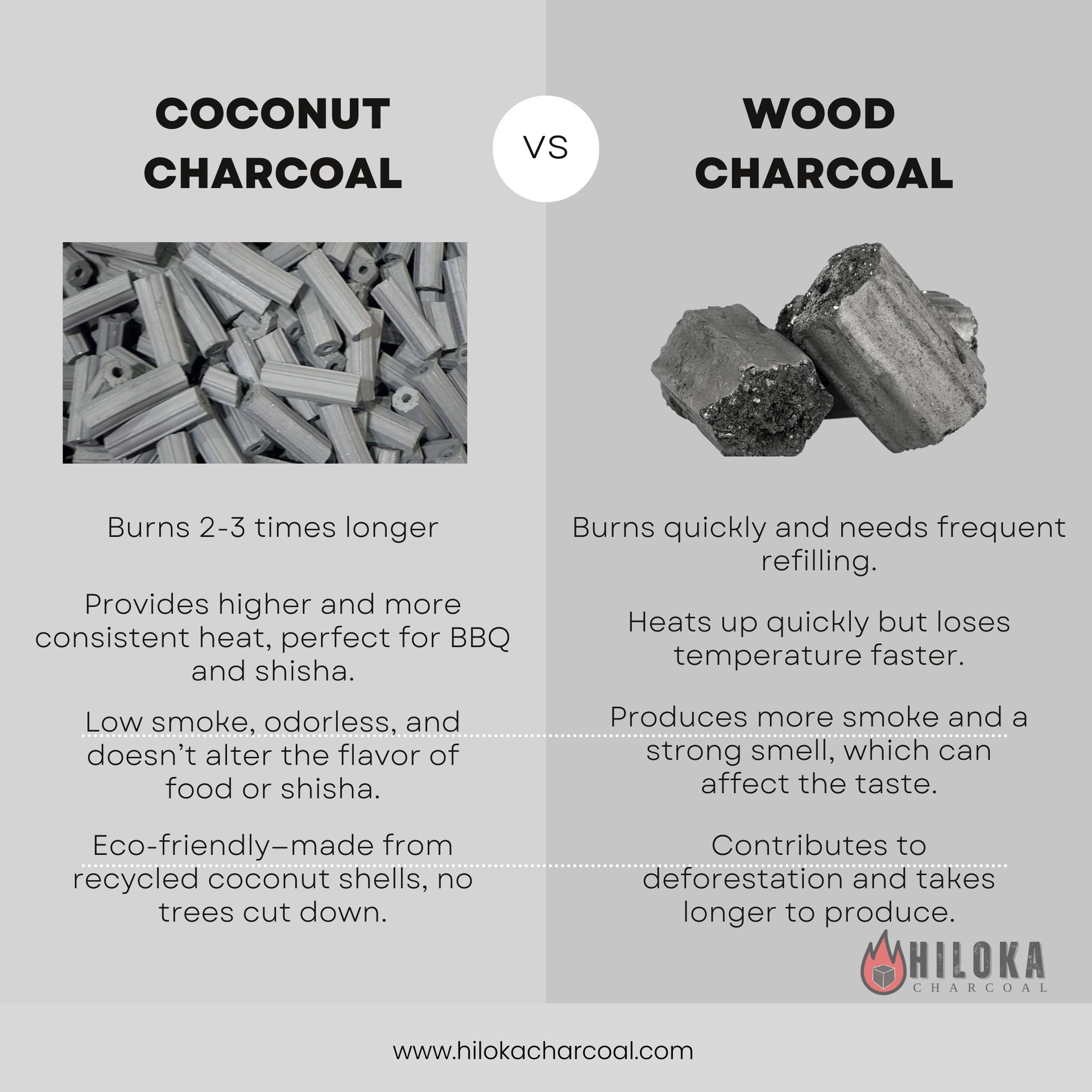
Coconut charcoal burns significantly longer than wood charcoal.
Coconut charcoal: Long-lasting and stable
Wood charcoal: Burns faster and less consistent
Longer burning time means better efficiency and less frequent replacement.
2. Ash Content
Coconut charcoal produces less ash compared to wood charcoal.
Coconut charcoal: Low ash, cleaner usage
Wood charcoal: Higher ash, more residue
Less ash improves both convenience and overall performance.
3. Heat Stability
Heat consistency is crucial for both shisha and BBQ.
Coconut charcoal: Stable and even heat
Wood charcoal: Heat fluctuates more
Stable heat ensures better cooking results and smoother shisha sessions.
4. Cleanliness and Odor
Coconut charcoal burns cleaner with minimal smoke and no strong odor.
Wood charcoal may produce:
More smoke
Inconsistent burning quality
Clean burning is especially important for shisha use.
5. Environmental Impact
Coconut charcoal is made from coconut shells, a renewable by-product.
Wood charcoal requires cutting trees, which has a greater environmental impact.
For many international buyers, sustainability is an important factor.
Which One is Better for Your Business?
For distributors and importers, coconut charcoal offers more advantages in terms of consistency, performance, and customer satisfaction.
While wood charcoal may be cheaper, coconut charcoal provides better long-term value and is more suitable for premium markets.
Why More Buyers Choose Coconut Charcoal
Global demand for coconut charcoal briquettes continues to grow due to its reliability and efficiency.
You can explore our full range of coconut charcoal briquettes on the Products page.
To understand how we support international supply, visit our Export Capabilities page.
You can also read about the benefits of coconut charcoal briquettes to learn more about its advantages.
Conclusion
Coconut charcoal stands out as a superior choice compared to wood charcoal, especially for international markets. With longer burning time, lower ash, and cleaner performance, it offers better results for both shisha and BBQ applications.
Looking for a reliable coconut charcoal supplier?
Contact Hiloka Charcoal today to get product details, pricing, and export information.
👉 WhatsApp: +6285926471011
👉 Email: sales@hilokacharcoal.com
© 2024. All rights reserved.
Quick Links
Business Hours
Monday – Friday: 08:00 – 17:00 (GMT+7)
Saturday: 08:00 – 13:00
Sunday: Closed
Contact Information
Looking for reliable coconut charcoal supplier ?
Send us your inquiry and our team will respond within 24 hours.
We welcome distributors , wholesalers, and importers worldwide.
Whatsapp : +6285926471011
Email : sales@hilokacharcoal.com